Few towns in south-central Kentucky reward a close read the way Cave City does. Anyone sizing up Cave City, KY commercial real estate is really underwriting a single, durable asset: the visitor traffic that pours off Interstate 65 on its way to Mammoth Cave National Park. That traffic already carries the town’s hotels, restaurants, and roadside retail, and over the next few years it is set to grow louder, not quieter.
But the same corridor that makes Cave City a tourism magnet has also drawn a hyperscale developer, a citywide moratorium, and a lawsuit. For an investor or tourism operator shopping here, three forces belong on one map: the tourism engine driving hospitality and retail demand, the data-center fight quietly repricing the corridor’s land, and the Opportunity-Zone overlay that can make a ground-up project pencil. Here is how they fit together.
The Tourism Engine: Mammoth Cave, Guntown Mountain, and a New Expo Center
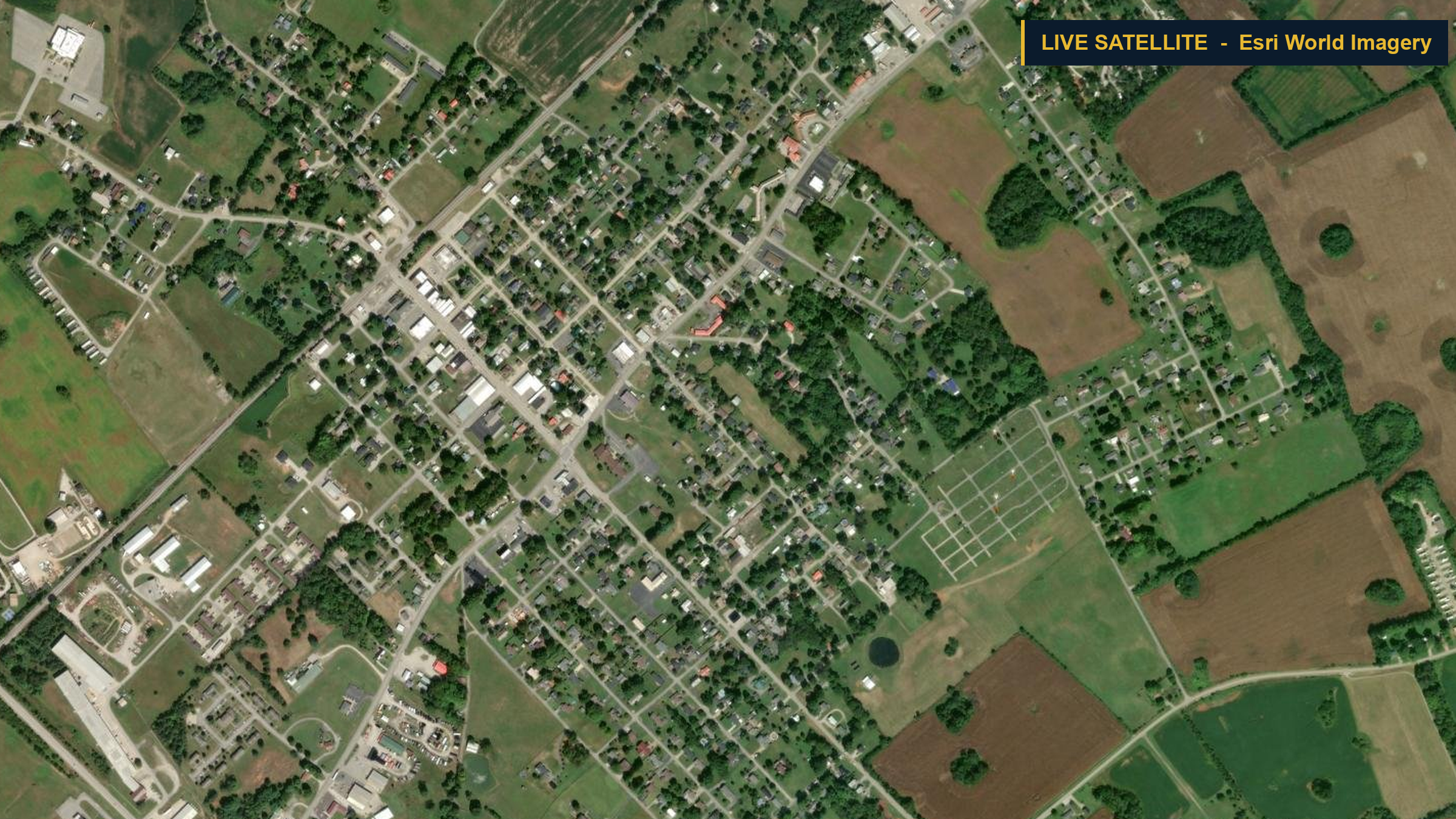
Cave City sits in Barren County as the primary commercial gateway to Mammoth Cave National Park, a perennial draw for road-trip families. That gateway status is the foundation of the local market: nearly every viable use here — lodging, dining, fuel, gifts, attractions — is a bet on how many people take the Cave City exit each year.
On February 3, 2026, roughly $20 million in federal funding was secured for a 3,000-seat Agricultural Exposition Center in the area. A venue of that scale changes a tourism town’s demand pattern, pulling livestock shows, trade events, and regional gatherings into the midweek and shoulder-season dates that hotels and restaurants normally struggle to fill. It smooths the revenue curve that makes hospitality hard to underwrite in a purely seasonal market.
The revival of Guntown Mountain adds another anchor: a hillside tourism and entertainment redevelopment with hospitality plans. Action Advisors has the Guntown Mountain redevelopment listed, and it is exactly the kind of experiential asset that keeps a family in town an extra night rather than passing through.
For investors, the tourism engine translates into a few concrete demand types:
- Lodging — hotels and short-term rental (Airbnb) product that captures overnight stays near the park.
- Quick-service-restaurant pads positioned to catch interstate and attraction traffic.
- Retail and redevelopment that serves Mammoth Cave visitors through the season and beyond it.
You can see the pattern in what already trades here. Cash-flowing assets like these income-producing Cave City rentals show how food service and residential income stack in a visitor economy, while historic downtown Cave City offers the walkable, redevelopable footprint a growing event calendar rewards.
The Data-Center Fight and What It Signals
The second force is less obvious but arguably more revealing. A developer operating as the Kentucky Industrial Alliance (KIA) filed for a data-center project of roughly 381 acres — a campus drawing up to about 1.2 gigawatts of power — on Doyle Avenue near Interstate 65. A draw at that scale does not land on just any parcel. It signals that the I-65 corridor through Barren County has the transmission access, land-assembly potential, and logistics profile the most demanding industrial users look for.
Cave City pushed back. Around May 18 to 20, 2026, the city enacted a 12-month moratorium on data-center development while it weighed the tradeoffs. KIA responded on June 8, 2026 by suing the city in Barren Circuit Court; no hearing date has been set. The dispute is unresolved, and any buyer should treat the outcome as an open question.
What should an investor take from a fight they are not a party to? Two things. First, a land-value signal: a developer willing to assemble hundreds of acres and command more than a gigawatt of power here puts a floor of seriousness under the corridor’s industrial land. Second, execution risk: the moratorium and lawsuit show that the city will use its zoning and permitting tools, and that entitlement timelines can shift under political pressure. That protects the tourism character buyers are paying for, but it means large or unusual projects need a local read-in before you underwrite them.
If you are weighing an industrial or interstate-frontage play, the mechanics matter. A large former I-65 truck stop is the type of high-visibility, utility-served site that both travel-center and industrial users chase, and our explainer on Kentucky data-center incentives and Opportunity Zones lays out how the state’s programs and the local politics interact before you commit capital.
The Opportunity-Zone Overlay
The third force is financial, and it is the one that most often turns a marginal Cave City deal into a fundable one. The Cave City and Horse Cave area — spanning Barren and Hart counties — is a designated federal Qualified Opportunity Zone. For investors sitting on capital gains, that designation lets those gains be deferred and potentially reduced when they are rolled into a qualifying development inside the zone.
Layer that overlay onto the tourism thesis and the math changes. A ground-up hotel, an extended-stay concept near the new expo center, or a mixed-use downtown redevelopment carries heavy upfront cost that seasonal revenue can be slow to justify. Opportunity-Zone treatment improves the after-tax return on exactly that kind of long-hold project, which is why it belongs in the underwriting from day one. Raw acreage benefits too — parcels like this Horse Cave land sit inside the zone footprint and give a developer a clean site for the qualifying asset.
Cave City, KY Commercial Real Estate: Where to Look
Put the three forces together and a shortlist emerges. The strongest Cave City, KY commercial real estate opportunities right now cluster where the tourism engine, the corridor’s pulling power, and the Opportunity-Zone overlay reinforce one another rather than working alone:
- Hospitality near the park and the new expo center — hotels and short-term rental that capture the widening event calendar.
- Quick-service-restaurant and retail pads on high-traffic frontage feeding interstate and attraction visitors.
- Downtown redevelopment that turns a walkable historic core into a destination in its own right.
- Income-producing assets already generating cash flow while a longer redevelopment thesis matures.
- Interstate and industrial-adjacent land, underwritten with the moratorium and pending litigation clearly in view.
You can browse current Cave City commercial listings to see what is available today, and for the wider regional context our Hardin County commercial real estate market report frames Cave City within the south-central Kentucky picture.
Frequently Asked Questions
Is Cave City a good place to invest in commercial real estate?
For the right strategy, yes. The market is powered by tourism traffic off Interstate 65 to Mammoth Cave National Park, and that demand base is strengthening with a new Agricultural Exposition Center and the Guntown Mountain redevelopment. Hospitality, quick-service restaurants, and visitor-serving retail are the clearest plays, and the area’s Opportunity-Zone status can improve after-tax returns on ground-up development. Seasonality and local entitlement dynamics belong in the underwriting.
What is the Cave City data-center moratorium?
Around May 18 to 20, 2026, Cave City enacted a 12-month moratorium on data-center development after a developer, the Kentucky Industrial Alliance, filed for a roughly 381-acre, up-to-about-1.2-gigawatt project on Doyle Avenue near I-65. The developer sued the city in Barren Circuit Court on June 8, 2026, and no hearing date has been set. It signals both that the corridor appeals to major industrial users and that the city intends to weigh such projects carefully.
Is Cave City in an Opportunity Zone?
Yes. The Cave City and Horse Cave area, across Barren and Hart counties, is a designated federal Qualified Opportunity Zone. Investors who reinvest capital gains into a qualifying development inside the zone may defer and potentially reduce the tax on those gains, which can materially improve the economics of a long-hold, ground-up project.
What is driving Cave City’s tourism growth?
Cave City is the primary commercial gateway to Mammoth Cave National Park, so its visitor economy starts with park traffic off Interstate 65. Two developments are set to add to it: roughly $20 million in federal funding secured on February 3, 2026 for a 3,000-seat Agricultural Exposition Center, and the ongoing revival of Guntown Mountain as a tourism and entertainment attraction with hospitality plans.
Cave City rewards investors who read all three forces at once — the tourism engine, the corridor’s industrial pull, and the Opportunity-Zone overlay — rather than any one alone. To pressure-test a specific site or strategy against the current market, contact the Action Advisors team and we will walk the map with you.